2025
/
Exhaustion, resistance and inner freedom
Heading 1
Heading 2
Heading 3
Heading 4
Heading 5
Heading 6
Lorem ipsum dolor sit amet, consectetur adipiscing elit, sed do eiusmod tempor incididunt ut labore et dolore magna aliqua. Ut enim ad minim veniam, quis nostrud exercitation ullamco laboris nisi ut aliquip ex ea commodo consequat. Duis aute irure dolor in reprehenderit in voluptate velit esse cillum dolore eu fugiat nulla pariatur.
Block quote
Ordered list
- Item 1
- Item 2
- Item 3
Unordered list
- Item A
- Item B
- Item C
Bold text
Emphasis
Superscript
Subscript
About the project
Review by ada Studio artist residency in Berlin by Akiles.
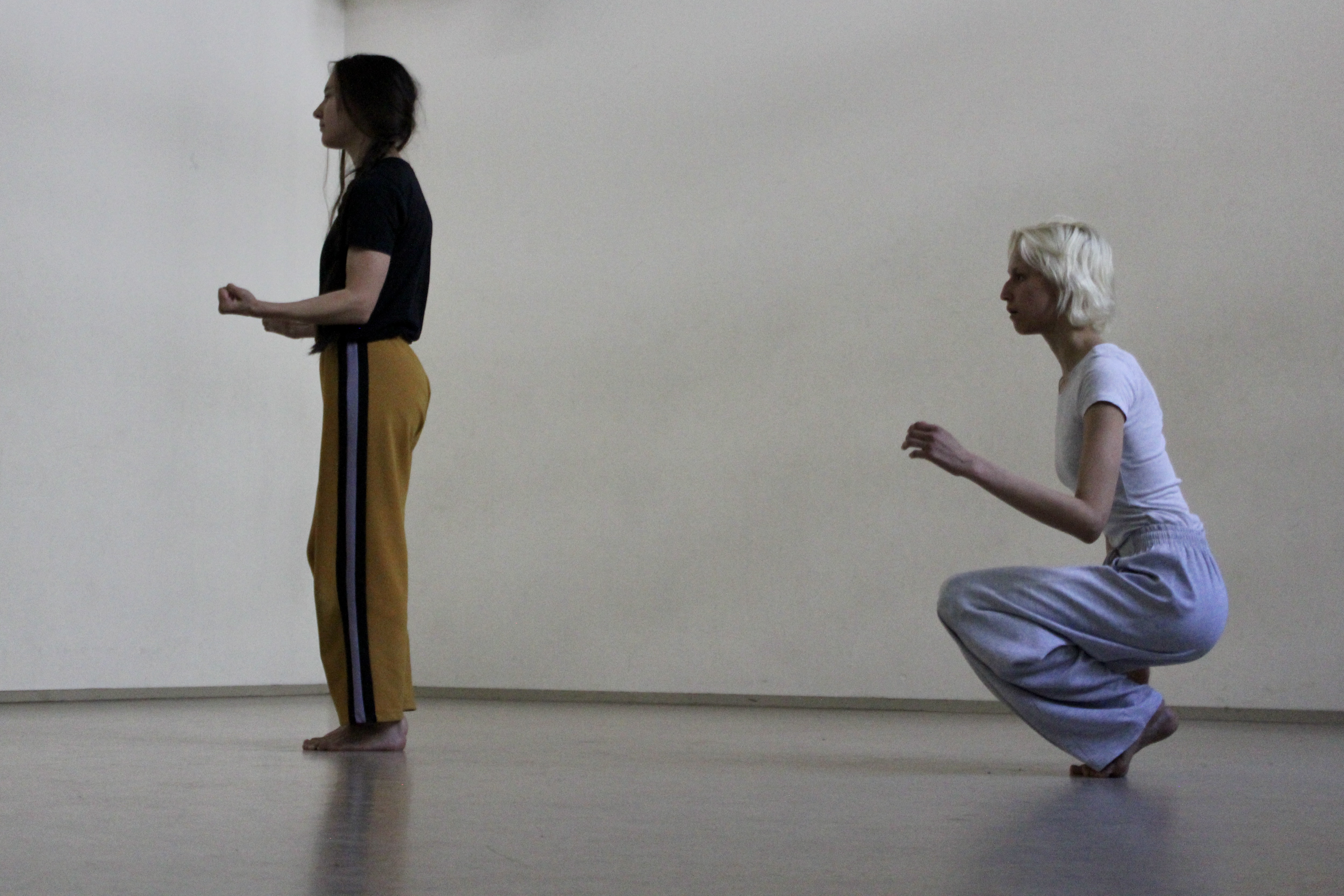
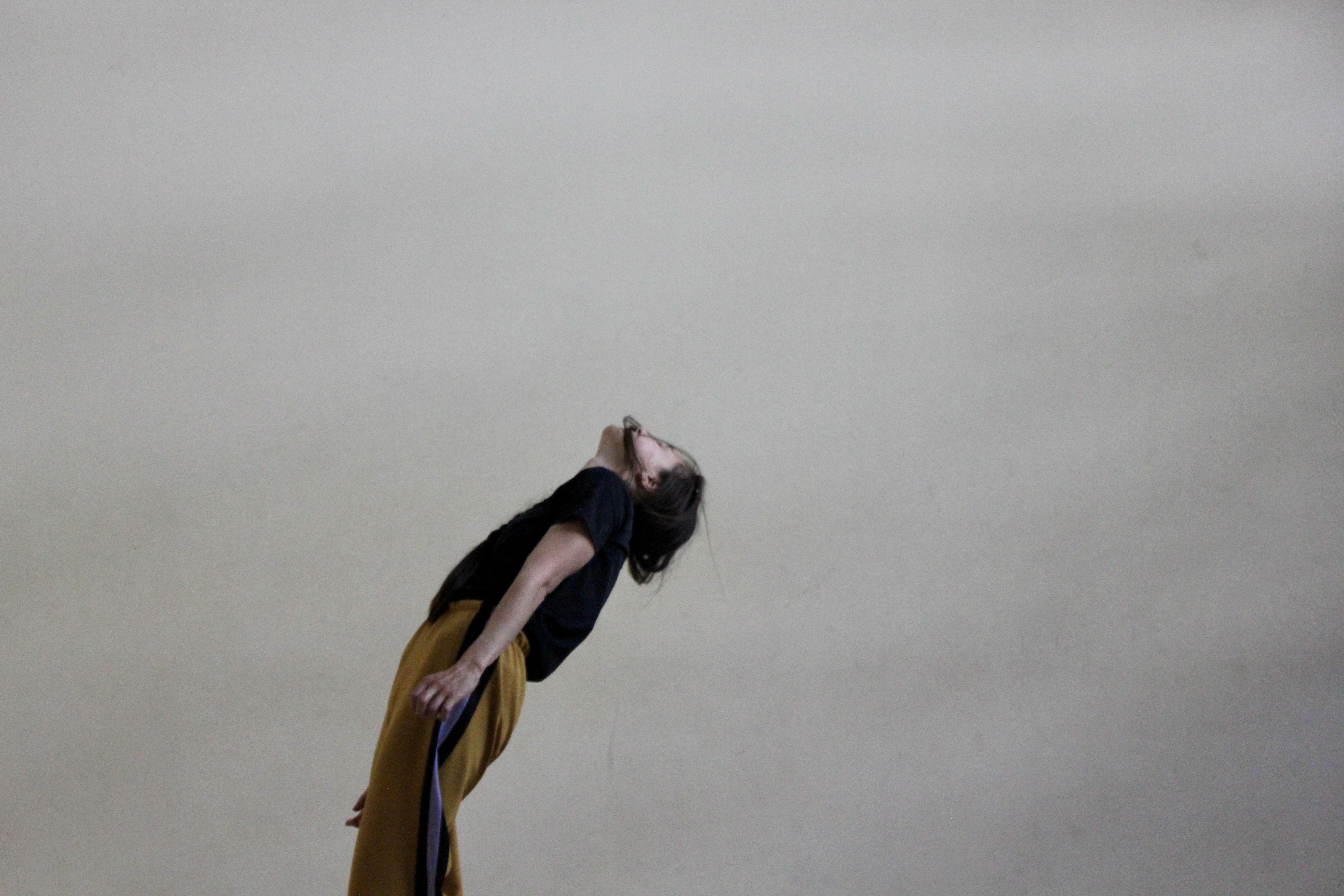
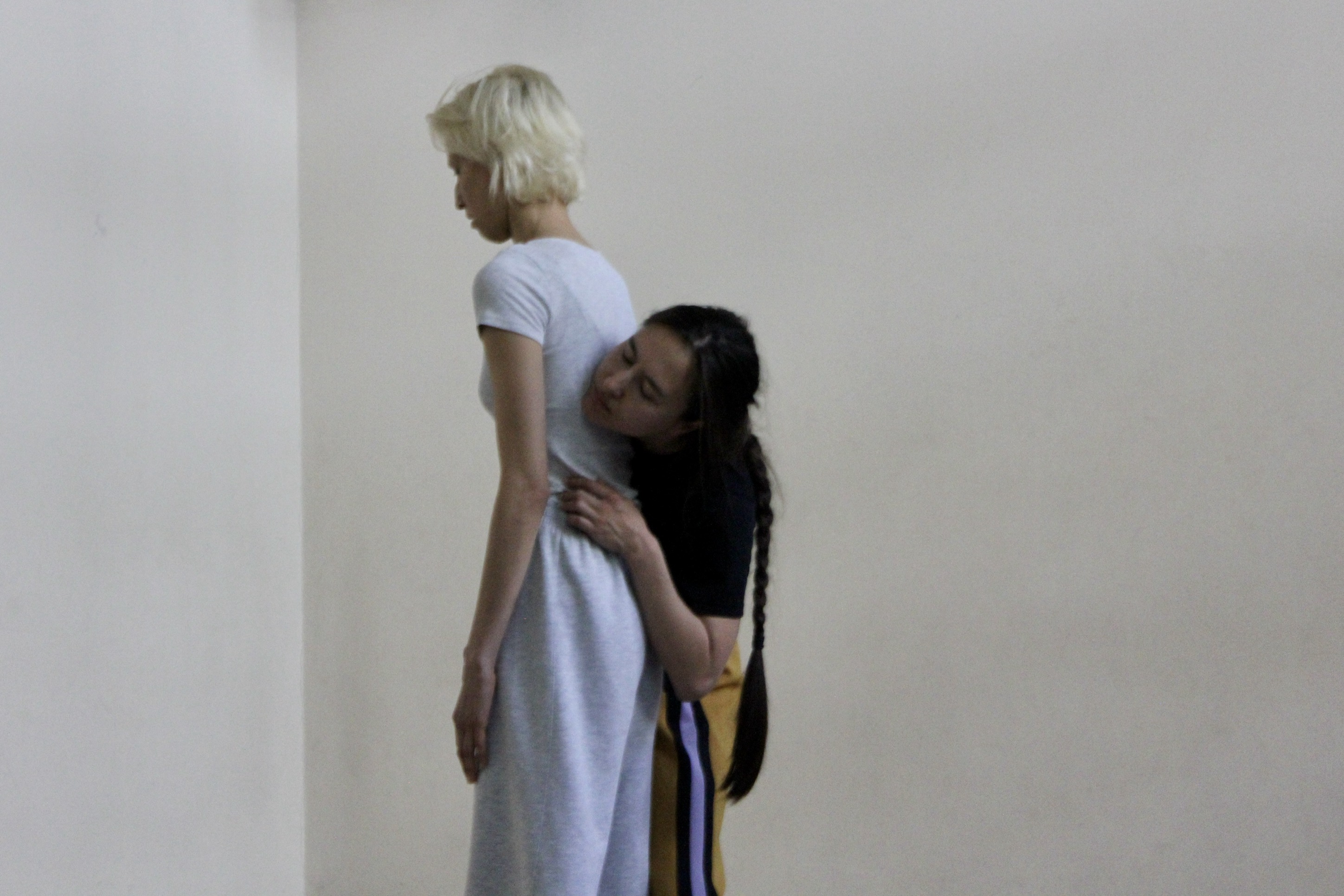
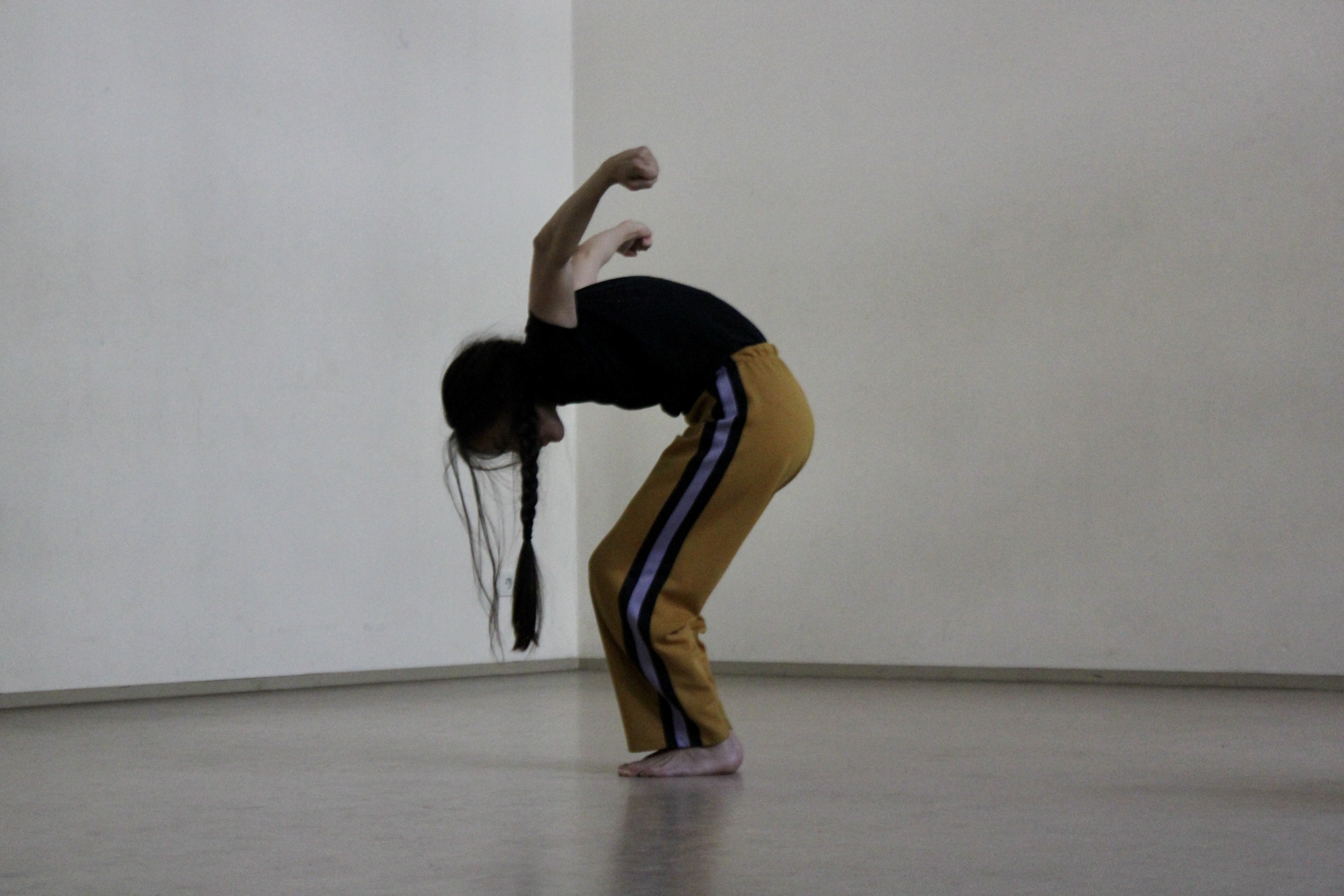
Sofya Shaikut and Elena Hizaar, after three and a half weeks of residency at ada Studio, share their research results in an open rehearsal.
Opening the performance, Elena is sitting on the deep left side of the stage, and Sofya is sitting on the front right side. Meanwhile, Elena whispers in a deep voice, and Sofya moves deeply toward falling aside. Accompanied by wind chimes, both dancers smoothly reach the floor through a shaky movement, underlining their state of desolation and exhaustion. In an act that enables the audience to share the described feeling and delve deeper into an honest and direct instance, a subtle tension of anxiety and uncertainty pervades the space, and the two dancers succeed in drawing the audience into a deeper scene.
Reality as a conceptualized event
The shock on the dancers' faces is no longer strange but relatively intelligible. The music changes to the sound of water droplets, and the shivering in the dancers' bodies increases as they move and walk across the stage, with heavy panting becoming louder and louder. The mood is darker, anxious, and exhausted. The two dancers alternate roles in projecting the scene's intensity in a dramaturgically brilliant form and a seamless composition of sharp and uncomfortable sequences.
Revisiting pain to release trapped emotions
They return to the first position. Elena makes trembling and intense sounds to create movement by standing on their knees. Moving across the stage, the dancers crawl to draw the feeling of shared pain that develops into falling for one of the dancers and arising for the other. They switch back and forth between mobility and exhaustion.
The music becomes an audible, distant soundtrack to a scene of suspense and anticipation, accompanied by precise and silent movement, akin to a trance-like state.
Exhaustion takes both the dancers and the audience to descend. As a result of constant governmental suppression, the chosen face-slapping gesture perfectly symbolizes the self-aggression of people, enduring this everlasting torture. Sofya and Elena manage to infect the audience with the collective depression and anxiety that a population has to bear when living under a dictatorship.
Eternal, monotonous attempts to change the dire circumstances
Rising again in another attempt to break out of this vicious circle, Elena goes to the side door on the stage to open it in vain, knocking on the walls. At the same time, Sofya moves with heavy steps that make sounds that overlap with the sound of knocking on the walls to develop into music accompanying the movement of the two. A harmonious rhythm appears in the sound, but for more frenzied and asymmetrical motion.
Wanting to break out, wanting to get away, like rats in a laboratory cage, there is no getting away, no exit.
Everlasting, eternal, never ending, try to overcome an obstacle in a single lifetime, without rhyme or reason, where a life can not be lived anymore because the suppression's stress makes life impossible, losing all life powers to that being locked up.
Leading the audience to empathize with helplessness
In the final part, folkloristic music started to rise. It was like a sign for the two dancers to slow down their visible movement towards more internal action and reflection of togetherness: dancers and audience. This led the spectators to a long and resounding applause as a reaction to a well-performing person and a release of their trapped emotions.
Sofya and Elena presented their first-hand experience authentically and transformed the stage into a real place to describe the tragedy.