




Back to Writings
Around Butoh and the “Self”
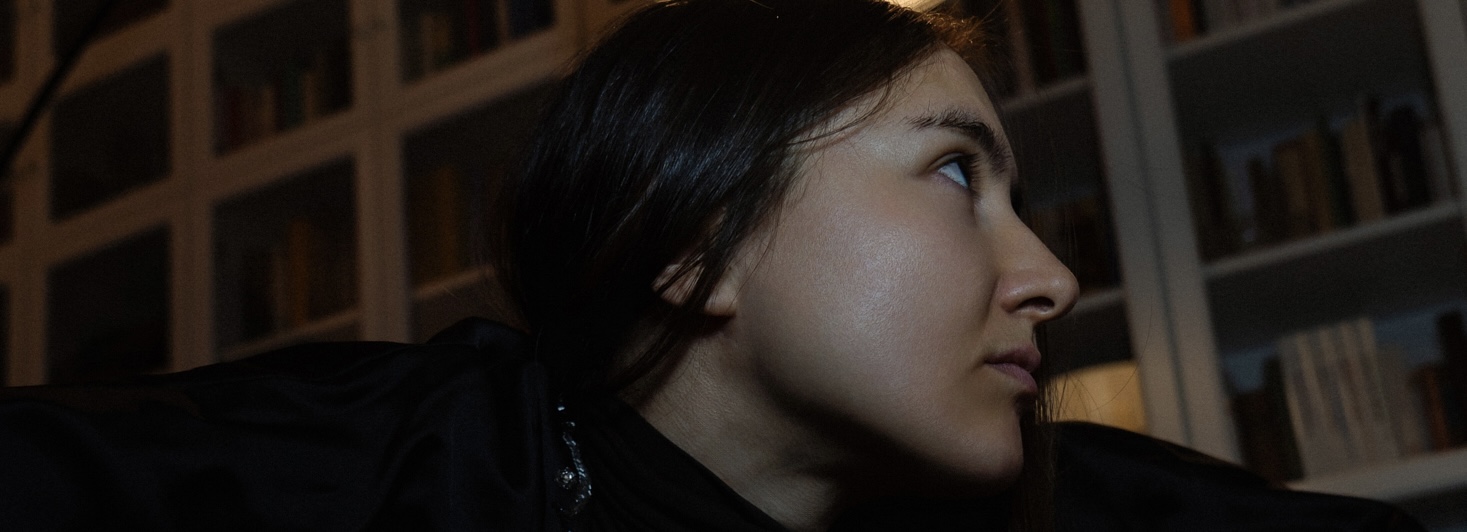
To dance butoh is to merge the real with the unreal. The world becomes your dream, and you dissolve into the world. Your dream arises from sensation and imagination, which lead you toward your bodily memories—memories that may be as old as the first life on Earth. The more deeply you feel and follow your body, the more you can be absorbed by what it dreams.
Dancing butoh is like reading a very, very compelling book: you become so immersed in the story that you forget time, place, even yourself. And yet the difference is essential: in butoh, the book is your own body. It contains no words, only sensations and images that carry you physically and psychologically into intimate yet unknown territories.
The body must be allowed to teach. One must let it be, without interference, so that it may reveal places we cannot reach in any other way. For this reason, butoh is a difficult, subtle, and extraordinarily beautiful dance. We dance life itself, burning in the body.
Here the question of the “self” emerges—the self that seems to disappear in any devouring experience, whether reading a fascinating book or performing an extraordinary dance. It is common to equate the “self” with the “ego” in its negative sense: that which imprisons and confines us within ourselves. Yet this interpretation has always seemed to restrict rather than liberate my dance.
I understand the “self” in multiple, interconnected ways:
a) as that which holds the flow of thought—“I am” both what thinks and the process of thinking, without which thought would disperse and not exist;
b) as that which holds the flow of sensations, images, memories, and experiences. In this sense, the “self” has access to the body of which it is itself an effect. Access, however, does not necessarily mean awareness—but butoh refines our sensitivity so that we may gradually become conscious of it;
c) as something that, precisely because it is both a and b, is always in the process of becoming.
There are two further dimensions:
d) the “self” is also one’s singular essence—what makes each person as unique as their dance;
e) and finally, the “self” is what the body is not, for the body is older than any of us as particular essences. We must therefore listen to the body as one listens to someone ancient and wise—though unconscious, in the sense that the body does not think itself.
Paradoxically, we discover who we are only in becoming, by participating in the flow of life. By following the unknown, we encounter what is most intimate and profound within us, coming to know ourselves again and again.
Once my butoh teacher, Sayoko Onishi, told me: “Be yourself.” This was deeply liberating, because I am—because we are—expansion: particles of the universe becoming the world through our singularity. And we are also that which listens to and contemplates this becoming.
In the house surrounded by dense forest where Imre Thormann lives, there are no mirrors in the bathroom. Instead, a red question mark is painted on the wall, addressing us, asking who we are. A newborn knows nothing of this. Only through living does one discover it. Only in this way does one acquire one’s shape—the shape whose contour death will one day make definitive.
Most people today fear becoming more than what they already know themselves to be, because becoming requires being soft like water and vulnerable like a child. In butoh, we learn how to do precisely this.
At the Temple of Apollo in Delphi it is written: “Know yourself.” The most profound way to do so is to live, to dance, and to think.
[Photo above by @gend_her]