




Back to Writings
On Possession
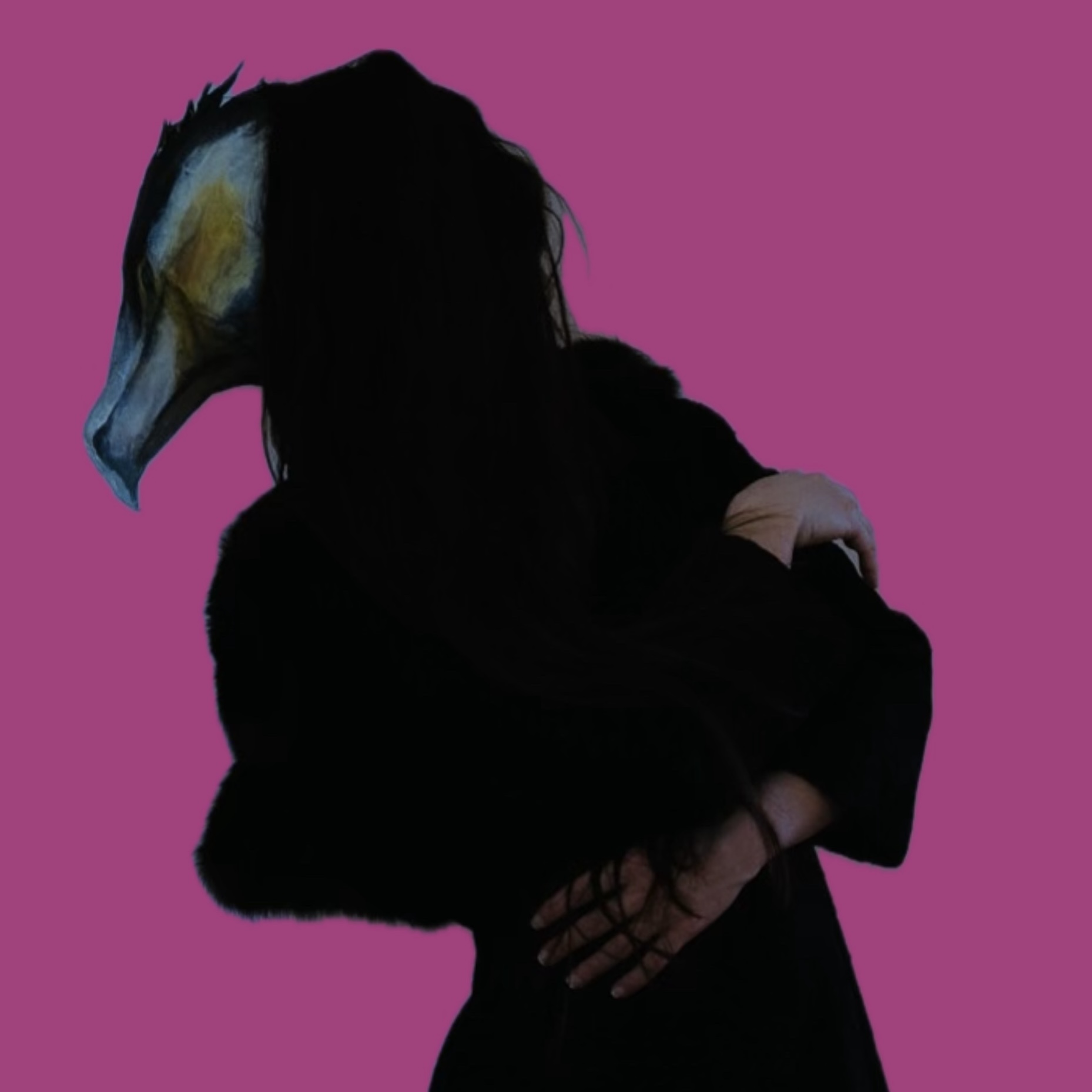
In butoh, we want to become different from ourselves, to be born into a new existence. But isn’t it that every time we dance, it is still we who are dancing? Can we truly become something other than ourselves?
The answer lies in the nature of following. If when I blindly follow someone, I give away my agency, when I wholeheartedly follow my body—its sensations, and the images and emotions these sensations provoke—I give myself away.
This ultimately is the nature of possession: a full and ecstatic surrender to the unknown of the body—a body much older than any “self” it brings forth—and that which comes to its encounter. When I dance, I follow the body’s pleasure, and pleasure ultimately doesn’t judge itself, it is a total dissolution into sensation beyond any notion of canonical beauty.
Being possessed is being born anew each time and seeing the world through a new lense. And a newborn does not wonder what kind of face it has and does not judge what it sees.
Where does the “I” go then? Ideally, the “I” observes the possession. The “I” becomes the eye of the hurricane—the calmest center that sees itself swirling. You witness yourself becoming other and seeing differently.
However, I should make a little detour. This experience is directly related to our understanding of ourselves. The more we see ourselves becoming, the more we learn about who we are: by encountering reactions, impulses, emotions, and images that surprise us and make us question our identity and, hopefully, make us grow. They do not confirm us, but stretch us to consciously embrace what is already there unconsciously. These surprises are not interruptions of identity; they are doorways into it. They expose the edges of who we think we are. For example, you may believe yourself to be calm, until you encounter a situation that evokes anger, and vice versa. Or you may see yourself as independent, until you feel a deep longing for connection. It’s a mistake to think that these contradictions are a break in your identity — they are an expansion of it. Another examples could be becoming a tree and seeing that your human body can resonate with it, or becoming an evil spirit and seeing that your emotions can be more-than-human, terrifying, sublime.
We become more true to ourselves and the world not by rigid consistency, but by our capacity to engage with and hold complexity — not only human complexity but the world’s complexity. In butoh it’s never about us as individuals, but about us as a beings that can sing the universe with all its badness and goodness by holding it in the body.
The more we see ourselves becoming—possessed—, the more we feel connected—resonant—with nature, with other humans, and with the unseen, and the more we learn about who we are — for we are relational. We are not confined by our skin or thoughts, we are something that emerges between ourselves and the world.
In a way, butoh is going away from home, so that distance shakes familiarity. Away from “home,” you are less reinforced by who you have been telling yourself you are, and more open to discovering who you might be. But the return is just as important — you bring some "souvenirs" : shifts in perception, a new sensitivity, a widened emotional range, a softened or strengthened way of meeting the world. Hopefully, too, "home" becomes much bigger than it used to be.
The movement is cyclical: away and back, becoming and recognizing. Each cycle deepens our sense of self, not as something we possess, but as something we participate in. And perhaps this is what is so beautiful about being alive: to know yourself is not to define yourself once and for all, but to stay in relationship with your own unfolding.
In butoh we train giving up to this unfolding and to the complexity of being human and other than human. We are travelers to distant lands and homecomers. We lose ourselves to find ourselves and the world. We — cosmic dust shaped into sensations, emotions, and thoughts. Thus, we are possessed.
Continue reading with a related post here.